Choosing yoga clothing for 2026 involves more than following seasonal colors or popular silhouettes. The right outfit should support movement, temperature control, and personal confidence. This guide explores how to find comfortable yoga outfits through practical details, including fabric softness, waistband stability, stretch recovery, and seam placement. A breathable pair of leggings may feel ideal during heated sessions, while loose cotton trousers can suit slower restorative practice. Your mat, studio temperature, and preferred movement style all matter.
Yoga educator Jessamyn Stanley often reminds students, “Yoga is for every body.” That principle should guide every clothing decision. Comfort does not have one universal shape. A high-rise waistband may feel secure for one person, yet restrictive for another. Wide straps can reduce pressure during practice, but they may shift during inversions. Small testing helps. Bend, twist, reach, and hold a seated pose before buying. Notice pinching, slipping, transparent fabric, or distracting labels.
Fit is personal.
Real experience also exposes imperfections. Some eco-friendly fabrics feel rough after repeated washing. Some attractive tops lose support quickly. Marketing language cannot replace careful inspection. Look for clear fiber information, durable stitching, and reliable return policies. This article compares leading yoga outfit types and explains where each design performs best. It also considers comfort beyond appearance, because an outfit that looks perfect online may feel wrong after twenty minutes of movement.
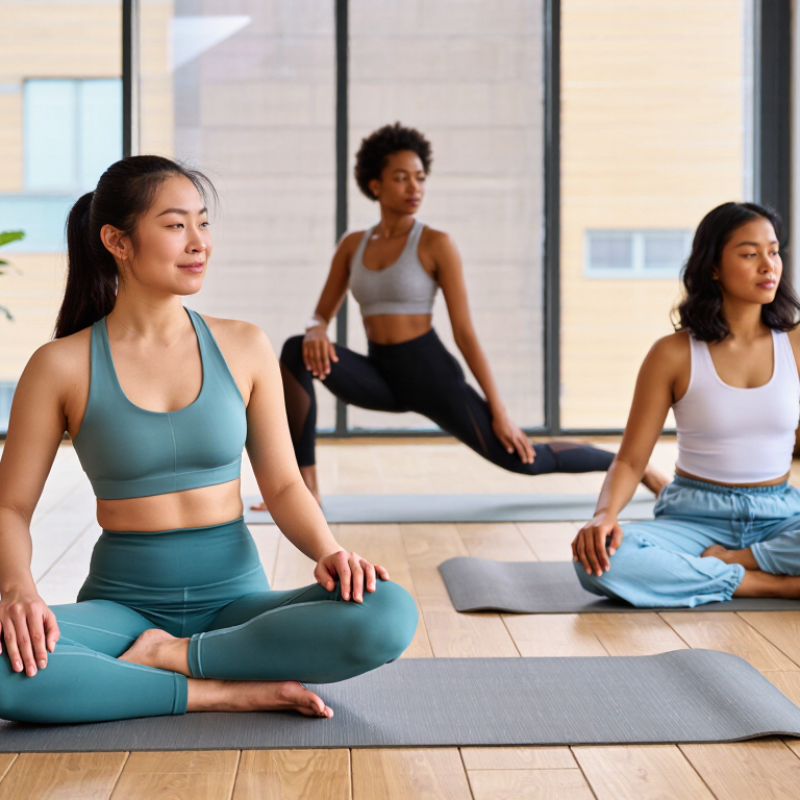
A comfortable yoga outfit should disappear while you move. It should not pinch your waist, twist at the shoulder, or expose skin during downward dog. Choose four-way stretch fabric with enough recovery, so leggings return to shape after lunges. A soft, wide waistband can reduce pressure around the abdomen. Flat seams also help prevent rubbing during longer sessions.
Breathability matters too. Look for moisture-wicking fabric, especially for heated classes. Polyester remains widely used; Textile Exchange’s 2024 Materials Market Report says it represented about 57% of global fiber production in 2023. However, fiber content alone does not guarantee comfort. A dense fabric may feel supportive but trap heat. A lighter knit may breathe better but become transparent when stretched. That trade-off deserves a real test.
Tips: Bend, squat, and twist before buying. Hold the fabric toward a light. Check whether the waistband rolls. Try sitting for five minutes. If you keep adjusting it, the fit is probably wrong. Grand View Research’s yoga clothing market report projects continued market growth through 2030, but more choices can create confusion. Do not trust “performance” wording without examining construction, stretch, and care instructions. Personal comfort can also change with body temperature, class intensity, and repeated washing. Jiova?
Yoga outfits should follow the practice, not a passing trend. The Global Wellness Institute’s 2024 Global Wellness Economy Monitor estimated the physical activity economy at 1.1 trillion dollars in 2022. Yoga’s growing variety makes fit more important. Restorative and yin sessions suit soft, breathable layers. Hot yoga requires lightweight, quick-drying fabric. Vinyasa needs four-way stretch and a waistband that stays flat during lunges. Loose sleeves can catch. It happens.
For power yoga, choose supportive tops, squat-tested leggings, and flat seams around the hips. For meditation, relaxed trousers and a warm wrap may feel better than compression. Pilates-inspired yoga often benefits from close-fitting clothing, so instructors can observe alignment. The Yoga Alliance and Yoga Journal study reported 36 million American yoga practitioners in 2016, up from 20.4 million in 2012. That audience includes beginners, older adults, and highly active students. One cut cannot serve everyone.
Tips: Bend, twist, and raise your arms before buying. Check whether the fabric becomes transparent under bright light. Avoid waistbands that dig in after ten minutes. I still misjudge softness when shopping online. Fabric descriptions help, but real movement reveals more. Wash the garment once, then inspect shrinkage, seam tension, and drying speed. Choose pockets only when they stay flat and do not distract from balance.
| Yoga Outfit Type | Best-Suited Practice Style | Recommended Fabric Characteristics | Ideal Fit | Support Level | Coverage Priorities | Key Comfort Considerations | Useful Outfit Components |
|---|---|---|---|---|---|---|---|
| High-Waisted Leggings and Supportive Top | Vinyasa, Power Yoga, and Ashtanga | Four-way stretch, moisture-wicking, breathable, and opaque fabric | Close-fitting without restricting hip, knee, or shoulder movement | Medium to high | Secure waistband, non-shifting top, and full seat coverage | Choose a flat waistband and a gusseted crotch to reduce pressure and chafing during repeated transitions. | High-rise leggings, medium-support sports bra, fitted tank, and lightweight hair tie |
| Breathable Shorts and Lightweight Tank | Hot Yoga, Bikram-Style Classes, and Heated Flows | Quick-drying, lightweight, sweat-wicking, and highly breathable fabric | Streamlined fit with enough room for unrestricted leg movement | Medium | Secure hems and a top that remains in place when arms are raised | Shorts should not ride up during lunges; a sweat-managing fabric can help limit discomfort in heated rooms. | High-waisted shorts, breathable sports bra or tank, and a small absorbent towel |
| Soft Leggings and Long-Sleeve Layer | Hatha, Iyengar, and Alignment-Focused Yoga | Soft stretch knit with moderate compression and low-friction seams | Body-skimming fit that makes knee, hip, and spinal alignment visible | Low to medium | Clear leg lines and a top that does not obscure the torso | A smooth, non-bulky design helps instructors observe alignment and prevents fabric from bunching under props. | Full-length leggings, fitted long-sleeve top, and removable warm-up layer |
| Relaxed Pants and Soft Layered Top | Yin Yoga, Restorative Yoga, and Gentle Stretching | Soft cotton blend, brushed knit, or breathable fabric with gentle stretch | Relaxed but not excessively loose around the feet or knees | Low | Warm coverage for long periods of stillness | Soft fabrics support comfort during extended holds; avoid thick seams that can press against the body while lying down. | Relaxed joggers or wide-leg pants, soft long-sleeve top, and lightweight cardigan |
| Full-Length Leggings and Convertible Layer | Outdoor Yoga and Travel Practice | Durable stretch fabric with moisture management and moderate insulation | Flexible close-to-moderate fit that allows movement and layering | Medium | Protection from changing temperatures, wind, and ground contact | Layering pieces should be easy to remove and store; darker, durable fabrics can be practical for outdoor surfaces. | Full-length leggings, breathable base layer, packable jacket, and non-slip socks |
| Maternity Yoga Leggings and Supportive Nursing-Friendly Top | Prenatal Yoga and Postnatal Recovery Practice | Soft, high-stretch, breathable fabric with a flexible supportive panel | Adaptable fit that supports the abdomen without compressing it | Low to medium, depending on stage and individual needs | Adjustable abdominal coverage and easy access for feeding after birth | A wide, smooth waistband can improve comfort; fit should be adjusted as the body changes and should never feel restrictive. | Over-bump or under-bump leggings, adjustable top, and supportive but non-compressive layers |
| Fitted Shorts with a Secure Sports Bra | Acro Yoga, Fitness Yoga, and Dynamic Partner Practice | Stretch fabric with good recovery, sweat management, and abrasion resistance | Secure fit that stays in place during lifting, inversions, and partner movements | Medium to high | Stable waistband, secure bust coverage, and minimal loose fabric | Test the outfit through squats, overhead reaches, and inversions before practice to check for shifting or unwanted exposure. | High-rise fitted shorts, supportive sports bra, and minimal-seam top |
| Modest Full-Coverage Set | Modest Practice, Community Classes, and Personal Preference | Opaque, breathable, moisture-wicking fabric with four-way stretch | Comfortable close-to-moderate fit without excess fabric around the hands or feet | Medium | Long sleeves, full-length bottoms, and secure coverage during inversions | Look for lightweight layers that prevent overheating and do not slide over the face or bunch at the ankles. | Full-length leggings, longline tunic or fitted top, and lightweight head covering if preferred |
| Minimal Seamless Set | Mobility Work, Pilates-Inspired Yoga, and Studio Practice | Seamless stretch knit with breathable zones and smooth yarn construction | Second-skin fit with moderate stretch and no excessive compression | Low to medium | Smooth torso and hip coverage with minimal visible lines | Fewer seams may reduce irritation, but the waistband and leg openings should still remain stable through movement. | Seamless leggings, fitted crop or tank, and lightweight studio layer |
| Layered Warm-Up Set | Cool-Weather Yoga, Morning Practice, and Pre-Class Warm-Up | Breathable thermal knit, soft fleece-lined fabric, or lightweight insulating material | Comfortable base layer with a removable outer layer | Low to medium | Warmth for muscles without restricting shoulder and hip mobility | Choose layers that can be removed quickly and avoid bulky drawstrings, zippers, or thick seams under the body. | Base leggings, fitted long-sleeve top, zip jacket, and warm socks |
How to Choose Yoga Tops for Support and Freedom of Movement
A good yoga top should feel secure without making breathing difficult. During practice, I check whether the fabric stays flat when I lift my arms. A high neckline can help during forward folds, while wide straps often reduce shoulder pressure. For gentle yoga, a light-to-medium support top may feel comfortable. More active flows usually need firmer support and stronger fabric recovery. Comfort matters most.
Tips: Try several poses before buying. Reach overhead, twist your torso, and hold Downward-Facing Dog for a few breaths. Notice whether the band rolls, the straps slip, or the chest feels compressed. Moisture-wicking fabric can help during sweaty sessions, but softness still matters. Look for smooth seams around the ribs. Small details count.
Fit is personal. A snug top is not automatically supportive, and a loose top is not always freer. I once chose a very tight style for stability, but it distracted me throughout class. That experience changed my view of “secure.” The best top moves with your ribs and shoulders, then returns to shape without digging into your skin. Check the care label too. Some stretch fabrics lose support after repeated high-heat washing. Test the details.
Choose support according to movement intensity: low-support tops suit restorative and gentle practices, while medium- and high-support designs are more suitable for flowing sequences, inversions, and vigorous classes. Freedom-of-movement scores reflect practical fit priorities such as stretch, shoulder mobility, and reduced fabric restriction.
Rating scale: 1 = low, 5 = high. These are practical garment-selection ratings based on the movement demands of common yoga practice types, not brand or company performance data.
Choosing yoga bottoms starts with movement, not appearance.
The Yoga Alliance and Yoga Journal 2016 study counted 36 million U.S. yoga practitioners, up from 20.4 million in 2012. That growth shows why one “universal” fit is unrealistic. Different bodies need different waist heights, leg openings, and coverage levels.
Test bottoms in a deep squat, seated fold, and wide-leg stretch. The waistband should stay flat without pressing your ribs. A gusset can reduce pulling around the inner thighs. Four-way stretch supports transitions, but excessive stretch may become transparent. Check the fabric under bright light.
Also inspect seams near the hips and knees. Flat seams usually reduce rubbing during longer sessions. I still find some soft fabrics lose shape quickly. Comfort can hide weak recovery.
Tips: Measure your waist and hips, then compare both with the size chart. Choose the larger size when measurements fall between sizes. Try a drawcord for inversions or vigorous flows. For sensitive skin, select smooth, breathable fabric and wash it before practice. Textile Exchange’s Materials Market Report 2024 reported global fiber production reached 124 million tonnes in 2023. That figure encourages a practical question: will these bottoms remain comfortable after repeated washing? A durable pair should recover its shape, maintain coverage, and avoid becoming shiny at the knees.
In 2026, comfortable yoga outfits will depend less on appearance and more on fabric behavior. During fitting sessions, I check stretch, recovery, softness, and airflow. A useful pair should move with the hips without pulling across the waist. It should also stay smooth during forward folds.
Textile Exchange’s 2024 Materials Market Report recorded 124 million tonnes of global fiber production in 2023. Polyester represented about 57% of that volume. This explains its popularity in yoga wear, especially for sweat control and durability. However, polyester can feel warm during slow, heated sessions. Nylon often feels smoother, while cotton offers softness but dries slowly.
Small test. Rub the fabric against your forearm and stretch it repeatedly. Roughness or whitening may reveal future discomfort.
Sizing deserves equal attention. Measure the waist, hips, and inseam, then compare them with the garment’s actual chart. Do not trust size labels alone.
A 2024 global wellness economy report valued wellness at approximately 6.3 trillion dollars in 2023, showing how strongly consumers invest in movement and self-care. Yet comfort remains personal, not statistical. I sometimes choose a tighter waistband for balance, then regret it after forty minutes.
Try squatting, twisting, and lying down before buying. Check whether seams press into the ribs or inner thighs. Also inspect opacity under bright light. A fabric that looks comfortable may still become distracting in practice.
It should feel almost invisible while you stretch, fold, squat, and twist. Four-way stretch helps the fabric follow your body. A soft, wide waistband can reduce pressure around your abdomen. Flat seams may prevent rubbing during longer sessions. No constant adjusting.
Bend, squat, twist, and sit for five minutes. Check whether the waistband rolls or digs into your ribs. Hold the fabric toward a bright light. If it becomes transparent, choose another pair. I sometimes trust softness too quickly and regret it later.
Look for softness, airflow, stretch, and strong shape recovery. Moisture-wicking fabric can feel helpful during sweaty sessions. Dense fabric may offer support but trap heat. Lightweight fabric may breathe better but become see-through. The trade-off needs testing.
Measure your waist and hips before checking the size chart. Choose the larger size when measurements fall between sizes. The waistband should stay flat without squeezing your ribs. A drawcord can add security during vigorous flows. Fit labels are not always reliable.
A gusset can reduce pulling near the inner thighs. Flat seams may limit rubbing around the hips and knees. These details matter during deep squats and seated folds. They are small features. Your skin notices them.
Smooth synthetic fibers often dry quickly and resist wear. Nylon may feel soft and flexible. Cotton can feel gentle but dries slowly. Polyester can manage sweat, though it may feel warm. Personal comfort changes with room temperature and class intensity.
Read the care instructions before buying. Wash the garment as directed, then check its stretch and shape. Inspect the knees for shine or sagging. Weak recovery can appear after only a few washes. I still underestimate this problem sometimes.
Function should come first. An attractive outfit becomes distracting if it twists or exposes skin. Check coverage during downward-facing positions and wide-leg stretches. Examine construction, not only performance wording. A simple pair that stays comfortable may be the better choice.
Finding the right yoga outfit begins with balancing comfort, function, and personal preference. The best pieces allow unrestricted movement, manage moisture, and stay securely in place during stretching, flowing sequences, or restorative poses. Popular options include fitted sets for dynamic practices, relaxed layers for gentle sessions, supportive tops for active movement, and flexible bottoms such as leggings, shorts, or wide-leg pants. Understanding how to find comfortable yoga outfits means considering the demands of your practice as well as your body’s natural movement.
When choosing yoga tops, look for breathable materials, reliable support, and designs that do not ride up or restrict the shoulders. For bottoms, focus on a comfortable waistband, stretch, opacity, and coverage in every pose. Fabric softness, ventilation, durability, and accurate sizing also strongly affect the overall experience. Try moving, bending, and sitting in each item before deciding, and choose clothing that feels comfortable without constant adjustment. A practical yoga wardrobe should support confidence, freedom, and ease throughout every session.

Lifted Clothe